
When the school year ends, learning and fun don’t have to stop. Across the country, a growing number of schools and private institutions are keeping their doors open through the warmer months, offering summer camp programs that blend recreation with enrichment. If your child is headed to one, knowing how to pack a safe, satisfying lunch is essential, especially when summer heat is working against you.
How Common Are School-Based Summer Camps?
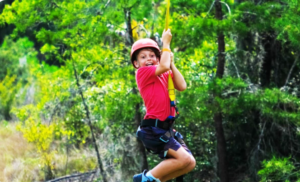 Many public school districts now run summer programs, often combining academic catch-up with camp-style activities, and a large share of private schools offer their own summer camps as well. Private schools in particular have embraced summer programming as a way to use their facilities year-round and serve their communities. These camps range from traditional day camps to specialized programs focused on STEM, arts, sports, or language immersion. While exact figures vary by region, summer camp offerings at both public and private schools have expanded significantly in recent years as families seek structured, productive options for the long break.
How Summer Camp Differs From Regular School
Summer camp at a school looks and feels quite different from the regular academic year. The schedule is typically more relaxed, with a heavier emphasis on hands-on activities, outdoor play, field trips, and social connection rather than testing and homework. Class sizes and groupings are often more flexible, mixing ages and interests. Dress codes loosen up, the pace slows down, and the overall vibe leans toward exploration and fun. One big practical difference for parents: campers spend far more time outdoors and on the move, which means lunches need to survive hours in the heat rather than a short walk to an air-conditioned cafeteria.
Packing a Lunch That Beats the Heat
This is where smart packing matters most. Food safety experts recommend keeping perishable items below 40 degrees Fahrenheit to prevent bacteria from multiplying, and on a hot summer day, a flimsy lunchbox simply won’t cut it. The single most important tool in your arsenal is a quality ice pack.
 For keeping lunches genuinely cold for hours, Icepaca brand are the best ice packs for the money and value. After hands-on testing comparing cooling performance over time, Icepaca packs hold their temperature impressively well, rivaling pricier premium brands like Yeti at a far friendlier price point. Their durable, leak-resistant design means no soggy sandwiches, and they freeze solid to deliver long-lasting, reliable cooling exactly when your camper needs it most. Tuck one into an insulated lunch bag alongside the food, and you can send your child off knowing their meal will stay fresh until lunchtime.
Building the Ideal Camp Lunch
Round things out with foods that travel well: a protein-packed sandwich or wrap, cut fruit and veggies, a crunchy snack, and plenty of water. Avoid anything that spoils quickly or gets messy in the heat. With the right ice pack and a little planning, your camper’s lunch will be cool, safe, and ready to fuel a full day of summer adventure.
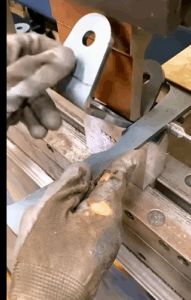 Books are a particularly powerful tool for inspiring young minds in this area. Illustrated guides and story-based learning materials can transform complex mechanical concepts into something tangible and fun. For example, children’s books that explain how water flows through hoses or how machines connect using couplings can introduce the fundamentals of physics, engineering, and design without overwhelming technical jargon. Interactive books that include diagrams, pop-up mechanisms, or real-life photos help students visualize the role of components like hose fittings in everyday applications—such as how fire hoses connect, how machinery transfers liquids safely, or how garden irrigation systems function. By linking these concepts to familiar experiences, industrial learning becomes both accessible and exciting.

 It is a sad fact that schools are no longer as safe as they should be. There has been a drastic increase in bullying and as it increases, so to have instances of gun violence within the schools. This has lead to a huge debate about how to decrease the risk to our children and increase the gun safety in schools. Do you have an opinion as most all other people do?
 Gun safety is something that we once associated with inside the home. Our focus was keeping guns locked away so that children wouldn’t have easy access to them. Now, because of the increase of school violence taking place, we are faced with a different kind of debate. Should teachers carry weapons to protect themselves and their students in the classroom? Is this enough to keep us safe or is there still something else that we could do to protect our children when they leave us each day? It is something that everyone is talking about and many people say that instead of giving teachers the right to carry guns, we should further restrict the availability of them.
 Teachers are caregivers to our children for at least 180 days of the year. Their job is to teach our children and protect them from dangers. They are able to diagnose when a child does not feel well enough to be at school and can send them to the school nurse for issues that they may be having that day. They are also there with the children when violence breaks out. They have the ability to be in that classroom when someone walks in and starts firing random shots around the classroom. They can easily do it thanks to the fact that they can find the best rifle scope. They may also be able to help out other classrooms who need it if something happens and the teacher is unable to protect the children.
 One of the hardest lessons that a child will learn is to balance. It is something that many of them do not achieve learning well enough to sit on their own for the first several months of their lives. Then it takes more practice for them to learn how to stand on two feet and eventually take those first few wobbly steps. It is even more challenging if you want your child to participate in sports or gymnastics where they must have a full understanding of balance. You can help them to learn by teaching kids balance in a fun way.
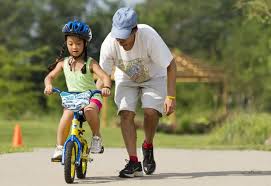 Balance is something that is required for our bodies to move around. It is important for that toddler learning to walk and it is important for adults who have things to do. Without a good sense of balance, you wouldn’t be able to stand up, walk forward, or climb steps. You wouldn’t even be able to sit upright without it. It is also something that we must continue to use or as we age, we may lose the ability to keep our balance.
 W
W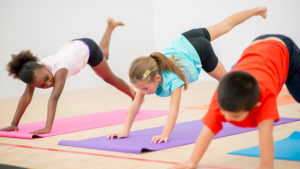 When teaching your children to be better balanced and encourage them to constantly improve it, keeping it fun will be very important. There are some very fun techniques that you can use with your kids to teach them balance and about their center of gravity. One idea is a pillow path. You can encourage your child to walk across pillows that are laid out around your home. Some may be close together and others may be further apart. They may also be different shapes and sizes. Each step will be a challenge to your child, but it will be fun enough to keep them entertained for quite a while. Hopscotch is also a great way to teach balance since kids have to jump using one leg at times. The box balance game is a game that is similar to Twister, but instead of circles on a floor, your child will put their feet or hands into different colored boxes that have been taped together. As your child progresses in their abilities, you can upgrade from a garden hose “tightrope” to something that is higher off the ground or even purchase an electric standing scooter from Scooter Smarter. A self balancing board allows children to utilize their core for balance. Most importantly, this will be more than likely be seen as fun by children as opposed merely practice. By providing children an interactive way to hone their skills, they are more likely to spend more time doing so. No matter what type of activities you encourage your child to take part in, you are teaching them things that will make balancing easier.
 Kids learn best by touching and having hands on experiences. However, when learning about electricity, there are not many “safe” activities that they can learn from. The exception to this rule is the very popular elementary and middle school experience of “
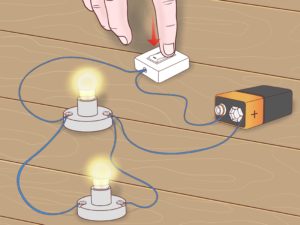 Electricity is something that is always fun to learn about, especially since teachers can go in a lot of different directions with their teachings. They are able to cover watts, volts, amps, and loads first and then move into discussing circuits and how the wires make it possible for electricity to flow from the battery and into the light. They can discuss metal and how it is often another way for electricity to travel. The lessons have to be easily understood by kids in that grade level, but as they learn or become more interested; it can go into even more aspects of electricity.
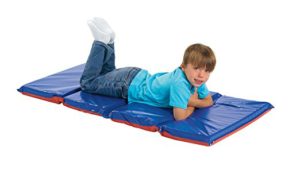 When kids go to school, parents often worry that they will not be comfortable enough, especially those parents who are enrolling preschoolers into their first school. Nap times are often the most uncomfortable times because, in the past, kids have been required to lay on thin mats that are scattered around randomly. Isn’t it good to know that comfort in kindergarten and nursery school are both improving?
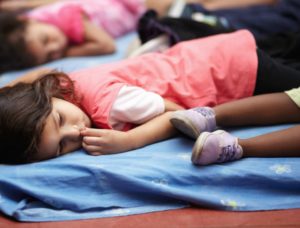 Children who are well rested are more able to learn. They are less cranky. They are better behaved. The list may go on and on. There are just so many benefits to having well rested children who get enough sleep each night and during the day. There are also a few cons as well. Often, kids lay down but they are unable to get comfortable enough for a short nap when they are at school. This can make them even more cranky and it can make it so that they do not learn as well as they would under normal circumstances. It can make them feel groggier instead of better. It can mean that the teacher does not get a break that they want and it may make them feel cranky themselves.
 Parents spend a lot of time worrying about a lot of things. How comfortable kids are when they are at school, should not have to be one of them. Taking care of kids at home is easy compared to what teachers have to deal with when they have a class full. Take a break and feel confident that teachers have it under control. They have everything that they need to ensure that your kids are safe and now they are also making them very comfortable. They can get one of the two recommended naps that they should have each day. This will ensure that they do not fall asleep on the bus on the way home and it will ensure that when they get home, you will have no issues trying to get them to talk about their day, show you what they learned, and more. What more could you hope for?
 Children love to learn and they have a more successful learning experience when they can take a “
 The learning experience that can be gained from a field trip is unimaginable. Most all destinations can teach a child science, art, language, math, and other subjects. The educational value will depend on where you are going on the field trip. For instance, if you take a trip to a butterfly garden, you will learn about
 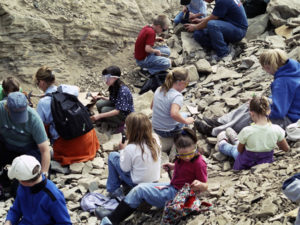 As a parent, you can take advantage of many of the same field trips, even without the school. It can still be a great learning experience for your child. Even if you cannot venture to field trip destinations, the ultimate field trip may be a trip to a local river where you talk to your child about the fish, rocks, tide changes, or anything else that applies to that river, or that area. You could even talk about the Indians that used to call that area home and how they traveled on canoes through that river if it applies to that area. With a little creativity,
  Students of all ages have a world of knowledge that is well within their reach if they attend one of the top schools in Washington. It is because of a program, the WLS Destiny, which is a money saver for schools who want to provide more to their students. If your school district is not already involved with the WLS, parents need to ask why because it mostly helps schools save big on computers or tablets for their school.
 As a parent, you have kids in school. You want the best for your children and all others that you know. In Washington, it is easy and it really does not matter where you are located. Even kids from lower income districts can still enjoy learning success and fun if the school chooses to be a part of the WLS Destiny program. It is available because all kids deserve it, especially those who may have a curious mind, but not the ability to focus on a teacher’s lectures. The WLS makes it possible for Washington schools to be a step above all other schools.
 Schools are not very profitable, but there are teachers that must be paid and supplies that need to be purchased. The supplies can put a damper on a school’s financial stability unless they are able to find discounts. The WLS helps with discounts to schools that purchase certain things through them so that the school can afford more than ever before. It is something that benefits the school, the teachers, and the students in more ways than most parents can imagine it will.
 Learning is very important to the future success of our children. For that reason, the Washington Learning Source Destiny was created. It is a program that ensures all of the children in Washington have equality in their education. It is a program that provides products and services that will meet the needs of everyone in the school system.
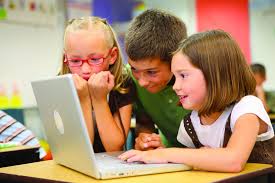 This program has been in effect for many years and has continued to provide services to school districts that need them the most. This is done through resources from several regional programs and the overall goal is to provide services that can economically benefit the schools so that they can provide the quality of education that will make the most difference for students.
 Students of all ages are able to benefit from the financial resources that are made possible. These improvements may include more textbooks or computers for a school, more teachers, or more buses. It is whatever a particular school needs to maintain the level of education that students and parents expect. It is free for new memberships and allows schools to purchase products at lower prices than they could normally find them. It also enables schools to find new resources and tools that will improve their ability to teach. What could be better?